

Lymphedema Therapy vs Compression Alone: Why Both Matter
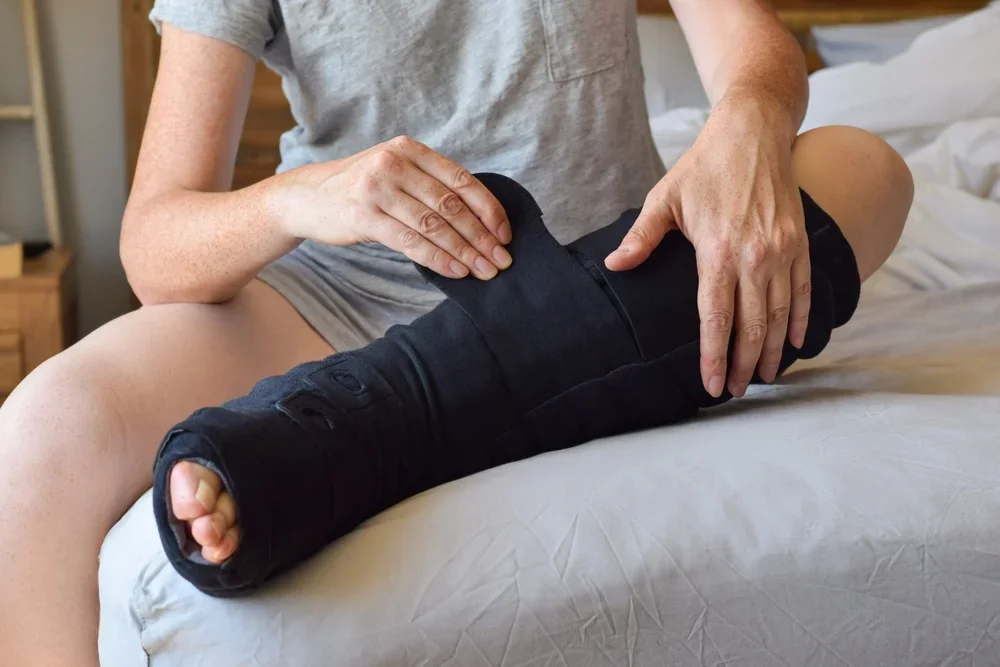
If you have been diagnosed with lymphedema or suffer from chronic swelling, you are likely no stranger to compression garments. Perhaps your doctor handed you a prescription for a sleeve or stocking, told you to wear it every day, and sent you on your way. You might dutifully pull it on every morning—struggling with the tight fabric—hoping it will make the swelling disappear.
But weeks or months later, you might find yourself frustrated. The swelling hasn't gone down significantly. Maybe the garment feels uncomfortable, or worse, the fluid seems to be pooling above or below the compression. You start to wonder: Is this all there is? Am I just supposed to squeeze the swelling forever?
This is a common scenario, and it highlights a fundamental misunderstanding in lymphedema care. While compression is a vital tool, relying on it as a solo treatment is often like trying to bail out a sinking boat without first plugging the hole. It helps manage the situation, but it doesn't solve the underlying flow problem.
At Lympha Villa, we believe in a comprehensive approach. We see firsthand that the magic happens not when you choose between therapy and compression, but when you combine them.
In this in-depth guide, we will explore the critical differences between Manual Lymphatic Drainage (MLD) and compression, why using one without the other often leads to suboptimal results, and how marrying these two therapies can help you finally achieve the relief you deserve.
The Two Halves of the Equation: Move It vs. Hold It
To understand why you need both, you have to visualize what is happening inside your swollen limb. Lymphedema is an accumulation of protein-rich fluid in the tissue spaces because the lymphatic system—your body's drainage pipes—cannot drain it fast enough.
Treating this condition requires two distinct mechanical actions: Evacuation and Containment.
1. Lymphedema Therapy (Evacuation)
Lymphedema therapy, primarily Manual Lymphatic Drainage (MLD), is the "mover." It is an active process.
The Goal: To stimulate the lymphatic vessels to contract faster and to manually reroute fluid around blockages (like scar tissue or removed lymph nodes) toward healthy areas where it can be drained.
The Mechanism: The therapist uses specialized, light skin-stretching techniques that pull on the anchoring filaments of the lymph capillaries. This opens the "doors" to the vessels, allowing fluid to enter, and then pushes that fluid up the line.
The Result: The actual volume of fluid in the limb decreases. The "traffic jam" is cleared.
2. Compression (Containment)
Compression is the "holder." It is a passive process (mostly).
The Goal: To prevent the fluid from returning.
The Mechanism: By applying external pressure to the skin, compression increases the tissue pressure. This counteracts the pressure inside the blood vessels (filtration pressure), making it harder for fluid to leak out of the blood and into the tissue. It creates a "wall" that stops the swelling from expanding.
The Result: The size of the limb is maintained. The "traffic jam" is prevented from reforming.
The Crucial Distinction: Compression is excellent at keeping a limb small, but it is very poor at making a limb small if the lymphatic system is clogged. Conversely, therapy is excellent at emptying the limb, but without compression, gravity will fill it right back up within hours.
Why Compression Alone Is Often Not Enough
Many patients come to our clinic after months of "compression only" management, feeling defeated because their limb size hasn't changed. Here is why reliance on garments alone can fall short.
1. Compression Doesn't Unblock the Drain
Imagine a garden hose with a kink in it. If you squeeze the hose upstream from the kink (compression), you might displace some water, but until you unkink the hose (therapy), the water has nowhere to go.
In lymphedema, the "kink" is often a cluster of damaged nodes or scar tissue. Manual Lymphatic Drainage actively creates detours around these blockages. A compression sleeve cannot find a detour; it just squeezes the fluid against the blockage. This can sometimes cause pain or fibrosis (hardening) as the proteins are compressed into the tissue without an exit route.
2. The "Tourniquet Effect"
If a compression garment is ill-fitting or if the proximal (upper) part of the limb hasn't been cleared first, the fluid can get trapped. For example, if you wear a knee-high stocking but haven't cleared the lymph nodes in your groin, the fluid moves up the leg and hits a wall at the knee or thigh. This can lead to new swelling in areas that were previously unaffected or cause a "muffin top" effect where fluid bulges over the top of the garment.
3. Fibrosis Needs Manual Breaking
Chronic lymphedema often turns the soft, fluid-filled tissue into hard, woody fibrosis. Compression alone cannot break down this scar tissue. In fact, compressing hard tissue can sometimes be uncomfortable and ineffective. Specialized manual techniques are required to soften this fibrosis, "liquefying" the blockage so it can be moved out. Only then can compression do its job effectively.
4. Patient Compliance and Comfort
Let’s be honest: wearing high-compression garments can be uncomfortable, hot, and difficult to put on. If a patient sees no reduction in swelling despite wearing the garment, their motivation to wear it plummets. They stop wearing it, the swelling returns with a vengeance, and the cycle worsens. Seeing the results from therapy—watching the limb actually shrink—provides the motivation needed to stick with the compression regimen.
Why Lymphedema Therapy Alone Is Also Insufficient
On the flip side, we sometimes see patients who love the massage but hate the bandages. They come in for therapy, get great relief, but refuse to wear compression at home.
This is equally problematic.
The lymphatic system relies heavily on muscle movement to pump fluid. However, in lymphedema tissue, the skin has often lost its elasticity—it's stretched out. When you move your muscles, instead of pumping fluid up the leg, the pressure just pushes the skin outward.
Without the rigid wall of a compression garment or bandage to push against, the effects of the manual drainage are temporary. You might leave the clinic with a smaller ankle, but by the time you walk to your car or sit at your desk for an hour, gravity will have pulled the fluid right back down. Therapy creates the reduction; compression sustains it.
The Power of the Combination: Complete Decongestive Therapy (CDT)
The gold standard of care, Complete Decongestive Therapy (CDT), doesn't ask you to choose. It integrates both modalities into a powerful two-phase protocol.
Phase 1: The Reductive Phase (Decongestion)
This is the "attack" phase. The goal is to get the fluid out and reduce the limb size as much as possible.
What Happens: You receive Manual Lymphatic Drainage frequently (often daily or several times a week).
The Compression Component: Immediately after drainage, the therapist applies multi-layer short-stretch bandaging. These are not your typical Ace bandages. They are specialized, stiff bandages that create a rigid casing.
Why It Works: When you move your arm or leg inside this rigid cast, your muscles push against the bandage. Because the bandage doesn't give, the force is directed inward, pumping the fluid out of the limb deep into the lymphatic vessels. This combined with the manual opening of the pathways results in rapid volume reduction.
Phase 2: The Maintenance Phase
Once the limb has plateaued—meaning it’s as small as it’s going to get—we switch to maintenance.
What Happens: Treatment frequency decreases. You take over more self-care.
The Compression Component: You transition from bulky bandages to compression garments (stockings, sleeves, gloves) worn during the day.
Why It Works: The garment maintains the size you achieved in Phase 1. Occasional "tune-up" MLD sessions help clear any buildup that the garment couldn't handle and keep the tissue soft.
Synergistic Benefits: 1 + 1 = 3
When Lymphedema Therapy and Compression are used together properly, the benefits compound.
1. Accelerated Healing
Post-surgical patients (like those recovering from liposuction or tummy tucks) who use both MLD and compression heal significantly faster. The MLD removes the inflammatory mediators and bruising, while the compression supports the tissue and prevents fluid pockets (seromas) from forming. The result is smoother skin and less downtime.
2. Improved Skin Health
Stagnant lymph fluid is toxic to the skin cells. It impairs local immunity and nutrition. By moving the fluid out (therapy) and keeping it out (compression), the skin receives better blood flow. Wounds heal faster, and the risk of cellulitis (a serious skin infection common in lymphedema) drops dramatically.
3. Greater Mobility
A heavy, swollen limb is a mechanical burden. It changes how you walk, leading to hip and back pain. By reducing the weight of the limb through therapy and supporting the tissue with compression, patients often find they can walk further, exercise more easily, and move with less pain.
4. Psychological Relief
Taking control of your body is empowering. Relying on compression alone can feel passive and hopeless if results aren't visible. Engaging in active therapy allows you to see progress. You see the wrinkles return to your knuckles or the definition of your ankle bone. This visual proof that the condition is manageable is often the biggest boost to a patient's mental health.
Navigating Compression: Not All Squeezes Are Created Equal
A critical part of our role at Lympha Villa is ensuring you are in the right compression. Using the wrong type can be useless or even harmful.
Circular Knit vs. Flat Knit
Circular Knit: These are the standard stockings you might buy at a pharmacy. They are seamless and tube-like. They are great for mild swelling or venous issues but can be dangerous for lymphedema because they can roll down and create a tourniquet effect, strangling the flow.
Flat Knit: These are custom-made garments that are knitted flat and then sewn together with a seam. They are stiffer and thicker. They bridge over skin folds rather than digging into them. For moderate to severe lymphedema, flat knit is often the required choice to maintain results without causing damage.
Class of Compression
Compression is measured in millimeters of mercury (mmHg).
Class 1 (20-30 mmHg): Light support, often for mild arm lymphedema or travel.
Class 2 (30-40 mmHg): Standard medical grade for most leg lymphedema.
Class 3 (40-50 mmHg): Strong compression for severe cases or lymphostatic elephantiasis.
Putting a Class 1 garment on a severe leg will do nothing; putting a Class 3 on a mild arm might cause pain. Your therapist helps determine the "Goldilocks" zone—just the right amount of pressure to contain the swelling without compromising circulation.
What a Comprehensive Session Looks Like
When you come to Lympha Villa, we don't just massage you and send you out the door. We integrate these principles into every session.
Assessment: We check how your current compression is working. Is it slipping? Is it digging in? Is the swelling increasing despite wearing it?
Unblocking: We perform the Manual Lymphatic Drainage to clear the proximal lymph nodes and flush the fluid from the limb.
Skin Care: We treat the skin to prevent dryness and infection.
Re-Compression: We never send a "drained" limb home naked. We will either apply fresh bandages (if you are in the intensive phase) or help you don your compression garment correctly to ensure the reduction we just achieved is locked in.
We also educate you. We teach you how to put on your garments without tearing them (or hurting your back), how to wash them so they last, and when it’s time to replace them.
Real Patient Scenarios: The Difference Combination Care Makes
Case A: The "Sleeve Only" Patient
Sarah had breast cancer surgery 2 years ago. She wore her sleeve religiously but noticed her arm was getting harder and heavier, and her hand was starting to swell.
The Issue: The sleeve was compressing the fluid, but the fluid had nowhere to go because the lymph nodes in her axilla (armpit) were removed. The fluid backed up into her hand.
The Fix: We started MLD to reroute fluid across her chest to the opposite armpit (which was healthy). We also recommended a glove to go with her sleeve.
The Result: Her arm softened, the hand swelling resolved, and she reported her arm felt 5 pounds lighter.
Case B: The "Massage Only" Patient
Mark had lymphedema in his left leg from prostate cancer surgery. He got massages once a month but refused to wear stockings because they were hot.
The Issue: He felt great leaving the clinic, but by the next morning, his leg was swollen again. The fibrosis in his ankle was getting worse because the protein was never permanently evacuated.
The Fix: We educated Mark on the importance of containment. We found him a lighter, more breathable velcro-wrap compression system that was easier to put on than stockings.
The Result: He maintained the reduction from the massage, and the hardness in his ankle began to break up.
Conclusion: You Need Both Keys to Unlock Relief
Managing lymphedema is a journey, not a sprint. It requires the right tools and the right team. Trying to manage it with compression alone is fighting with one hand tied behind your back. Trying to manage it with therapy alone is fighting gravity—and gravity always wins eventually.
By combining the active evacuation of Manual Lymphatic Drainage with the passive containment of proper compression, you create a sustainable, effective management plan. You stop managing the swelling and start reducing it.
At Lympha Villa, we are experts in this dual approach. We guide you through the intensive phase to get your limb small, and we support you in the maintenance phase to keep it that way. We help you navigate the confusing world of garments, bandages, and self-care so you can stop worrying about your limb and start living your life.
Ready to stop swelling and start healing?
Don't settle for partial relief. Experience the difference a comprehensive approach makes. Book a session with our certified therapists today, or visit our Services page to learn more about our integrated lymphedema care.
Frequently Asked Questions
Can I wear my compression garment while sleeping?
Generally, no. Most daytime compression garments (especially circular knit) have a high resting pressure that can be dangerous when you are lying down and inactive. At night, we typically recommend specialized "night garments" or foam-based bandaging systems that provide lighter, textured compression to continue breaking up fibrosis without restricting blood flow.
How often do I need to replace my compression garments?
Compression garments lose their elasticity over time. If worn daily, a sleeve or stocking typically needs to be replaced every 4 to 6 months. If it starts feeling loose or easy to put on, it likely isn't doing its job anymore.
Why does my therapist want me to wrap (bandage) instead of just wearing a sleeve?
Bandages (wrapping) are superior for reducing size because they can be adjusted daily as the limb shrinks. A sleeve is a fixed size—if your arm shrinks, the sleeve becomes loose and ineffective. Once the limb size is stable, you graduate from bandages to a sleeve.
Does insurance cover compression garments?
This varies by state and insurance plan. Some plans cover them fully, others cover a portion, and unfortunately, some do not cover them at all (viewing them as "supplies" rather than medical equipment). The Lymphedema Treatment Act has improved Medicare coverage for garments starting in 2024. We recommend checking with your specific provider.
Is it okay to just elevate my leg instead of wearing compression?
Elevation helps, but it is temporary. Unless you plan to spend your entire life with your leg above your heart, elevation isn't a practical management strategy. Compression allows you to be upright, active, and mobile while still controlling the swelling.