

Primary vs Secondary Lymphedema: What’s the Difference?
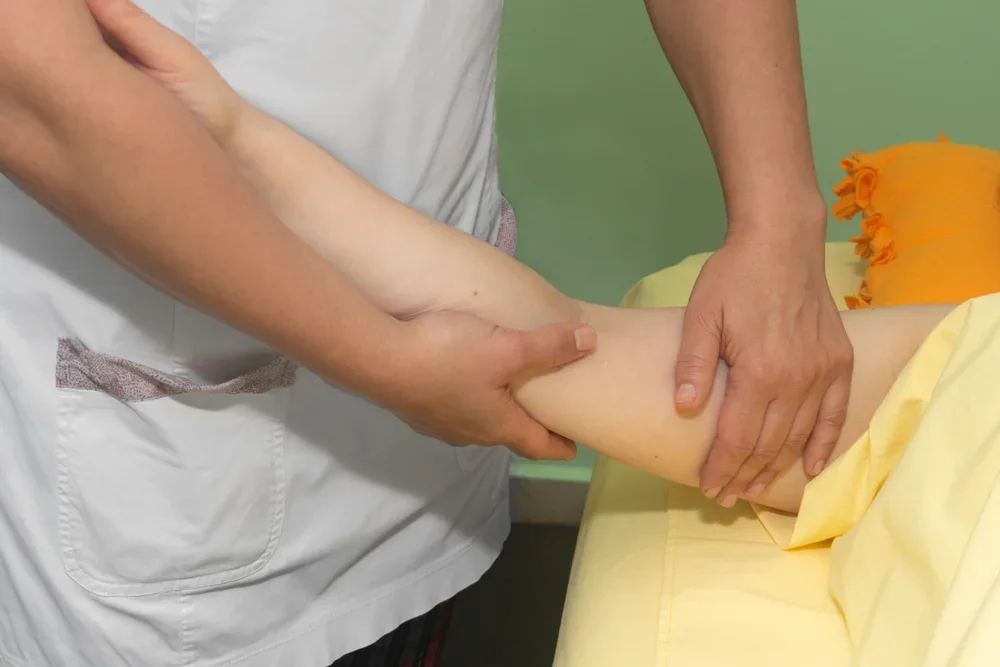
Swelling in a limb can be alarming. One day you notice your rings are tight, or your shoes don't fit quite right. For millions of people, this isn't just temporary water retention—it is the first sign of lymphedema. But not all lymphedema is created equal. Understanding the root cause of your swelling is the single most important step in managing it effectively.
Lymphedema is a chronic condition caused by a failure in the lymphatic system, leading to fluid accumulation in soft tissues. While the physical result—swelling, heaviness, and skin changes—often looks similar regardless of the cause, the medical origins divide the condition into two distinct categories: Primary Lymphedema and Secondary Lymphedema.
Knowing the difference between these two types affects everything from your diagnosis timeline to your long-term management strategy. Whether you were born with a lymphatic anomaly or developed swelling after cancer surgery, proper management is possible.
In this comprehensive guide, we will explore the genetic and environmental factors behind both types, how they manifest, and how specialized therapies like Lympha Villa’s Lymphedema Therapy can help you regain control of your life.
The Lymphatic System: A Brief Overview
Before diving into the differences, we must understand the system at play. The lymphatic system is your body’s "waste disposal" network. It runs parallel to your circulatory system and is responsible for maintaining fluid balance, absorbing fats, and supporting your immune system.
Under normal circumstances, protein-rich lymph fluid flows through a network of tiny vessels and passes through lymph nodes, where it is filtered before returning to the bloodstream. When this system is impaired—either because it was malformed at birth or damaged later in life—fluid gets trapped in the tissues. This accumulation is what we call lymphedema.
When the system fails, the protein-rich fluid acts like a sponge, attracting more water and causing inflammation. Over time, this can lead to fibrosis (hardening of the tissue) and an increased risk of infection. This mechanism happens in both primary and secondary lymphedema, but why the system failed in the first place is what distinguishes them.
What is Primary Lymphedema?
Primary Lymphedema is rare. It is caused by developmental abnormalities of the lymphatic system. essentially, the "plumbing" was built incorrectly from the start. This is not caused by an injury, surgery, or infection. Instead, it is typically genetic or congenital.
In cases of Primary Lymphedema, the lymphatic vessels may be:
Hypoplastic: There are too few vessels, or they are too narrow (most common).
Hyperplastic: The vessels are too large or dilated, causing valves to fail.
Aplastic: Specific vessels never formed at all.
Because this is a structural issue present from birth, it can technically manifest at any time, though it is often categorized by the age of onset.
Types of Primary Lymphedema
Medical professionals classify Primary Lymphedema into three main categories based on when symptoms first appear.
1. Congenital Lymphedema (Milroy’s Disease)
This form is evident at birth or within the first two years of life. It accounts for about 10-25% of all primary cases.
Characteristics: It often affects both legs and involves swelling of the feet and ankles. It is frequently associated with a genetic mutation (specifically the FLT4 gene) that affects the development of lymphatic vessels.
Identification: Parents may notice the baby’s feet look "puffy" or have deep creases. In some cases, intestinal lymphangiectasia (lymphatic issues in the gut) may also be present.
2. Lymphedema Praecox (Meige’s Disease)
This is the most common form of primary lymphedema, accounting for 65-80% of cases. It usually appears during puberty or shortly after, generally before the age of 35.
Why Puberty? The hormonal surges and rapid growth during puberty can place extra stress on a lymphatic system that was already compromised but functioning adequately up until that point. This creates a "tipping point" where the system can no longer handle the fluid load.
Gender Disparity: This type overwhelmingly affects females, with a ratio of roughly 4:1 compared to males. It typically starts in the foot or calf and may progress upward.
3. Lymphedema Tarda
As the name suggests, this is a "late-onset" form. It typically manifests after age 35.
Diagnosis: This form is often the most difficult to diagnose because swelling that appears later in life is usually attributed to other causes like venous insufficiency, heart failure, or kidney issues. A diagnosis of Lymphedema Tarda is often a diagnosis of exclusion—meaning doctors rule everything else out first.
Symptoms Specific to Primary Lymphedema
While swelling is the main symptom, Primary Lymphedema has unique presentation markers:
Distal to Proximal Progression: Swelling often starts at the furthest point (feet/toes) and moves upward.
Stemmer’s Sign: A classic diagnostic test involves trying to pinch the skin at the base of the second toe. If the skin is too thick or swollen to pinch and lift, the test is positive, which strongly indicates lymphedema.
Bilateral Asymmetry: While it can affect both legs, one leg is often significantly worse than the other.
Squared Toes: The toes may take on a boxy, squared-off appearance due to fluid pressure.
What is Secondary Lymphedema?
Secondary Lymphedema is an acquired condition. This means you were born with a healthy, functioning lymphatic system, but something happened to damage it. This is significantly more common than primary lymphedema.
Globally, the leading cause of Secondary Lymphedema is a parasitic infection called filariasis. However, in the United States and other developed nations, the leading cause is cancer treatment.
Common Causes of Secondary Lymphedema
1. Cancer Treatments (Oncology)
This is the category most patients are familiar with. Treatments designed to save lives can unfortunately cause collateral damage to the lymphatic system.
Lymph Node Removal (Lymphadenectomy): Surgeons often remove lymph nodes to check if cancer has spread (sentinel node biopsy) or to remove cancerous tissue (axillary or inguinal dissection). Removing these "filtration stations" disrupts the flow of lymph fluid.
Radiation Therapy: Radiation kills cancer cells but can also cause scarring (fibrosis) in the remaining lymph nodes and vessels, narrowing the pathways for fluid to travel.
Tumor Blockage: Sometimes, the tumor itself grows large enough to physically compress a lymphatic vessel, acting like a dam in a river.
This is why we place such a heavy emphasis on Breast Cancer Recovery at Lympha Villa. Understanding how surgery impacts your body allows us to create specific treatment plans. You can learn more about our oncology-sensitive approach on our Services Page.
2. Trauma and Surgery
Any major surgery or injury that cuts through lymph vessels can lead to lymphedema. This includes:
Orthopedic Surgeries: Knee or hip replacements.
Cosmetic Surgeries: Liposuction (especially Lipo 360), tummy tucks, or BBLs can disrupt superficial lymphatic pathways.
Vein Stripping: Surgeries for varicose veins can occasionally damage adjacent lymph collectors.
3. Chronic Venous Insufficiency (CVI)
Your veins and lymphatics work together. When veins in the legs fail (CVI), blood pools in the lower limbs. This increases the fluid load in the tissues (filtration), forcing the lymphatic system to work overtime. Eventually, the lymphatic vessels burn out from exhaustion, leading to a combined condition known as Phlebolymphedema.
4. Infection
Severe cellulitis or recurrent skin infections can scar the delicate lymphatic capillaries, reducing their ability to absorb fluid.
Symptoms Specific to Secondary Lymphedema
Proximal to Distal: Unlike primary lymphedema, secondary swelling (especially from cancer) often starts closer to the trunk (upper arm or thigh) and spreads outward, though this varies.
Surgical History: The swelling usually correlates directly with a specific site of trauma (e.g., left arm swelling after a left-sided mastectomy).
Scar Tissue: Visible scarring or radiation burns are often present near the affected quadrant.
Key Differences at a Glance
To simplify the distinction, here is a quick comparison:
Feature
Primary Lymphedema
Secondary Lymphedema
Origin
Genetic / Congenital malformation
Acquired damage / External trauma
Age of Onset
Birth, Puberty, or Late Adulthood
Anytime after surgery, trauma, or infection
Prevalence
Rare (1 in 100,000 people)
Common (1 in 1,000 people in US)
Common Areas
Mostly lower extremities (legs/feet)
Arms (breast cancer) or Legs (gyn/urology cancer)
Gender
More common in females
Varies by cause (high in females due to breast cancer)
Associated Genes
FLT4, FOXC2, SOX18
None (unless pre-disposition exists)
The Four Stages of Lymphedema
Regardless of whether you have Primary or Secondary Lymphedema, the condition progresses through the same clinical stages. Catching lymphedema in the earlier stages makes management significantly easier.
Stage 0: Latency Stage
The lymphatic system is compromised, but there is no visible swelling yet. You might feel a sensation of heaviness, fatigue in the limb, or tightness.
Note: If you have had lymph nodes removed, you are automatically in Stage 0. This is the ideal time to start preventative care.
Stage 1: Spontaneously Reversible
Visible swelling appears, usually later in the day. The tissue is soft and "pitting" (if you press your thumb into the skin, it leaves an indentation).
Key Characteristic: The swelling goes down or disappears completely with elevation or a night’s sleep.
Stage 2: Spontaneously Irreversible
The swelling becomes consistent and does not go away with elevation. The tissue begins to harden (fibrosis) because the protein-rich fluid is causing inflammation. Pitting becomes more difficult.
Risk: The risk of skin infections (cellulitis) increases significantly here.
Stage 3: Lymphostatic Elephantiasis
This is the most severe stage. The limb volume is extreme. The skin undergoes significant changes, becoming thick, hard, and warty (papillomas). Deep skin folds can develop, creating breeding grounds for bacteria and fungus.
Diagnosing the Difference
Accurate diagnosis is vital because it rules out other dangerous conditions like Deep Vein Thrombosis (DVT) or heart failure.
Physicians typically use a combination of:
Patient History: This is usually the smoking gun for Secondary Lymphedema. If you had an axillary node clearance six months ago and now have a swollen arm, the diagnosis is straightforward.
Lymphoscintigraphy: This is the gold standard imaging test. A radioactive tracer is injected into the web spaces of the fingers or toes. A special camera watches how the tracer moves. In Primary Lymphedema, the tracer might never move (aplasia). In Secondary, it might move but hit a blockage (obstruction).
Genetic Testing: For infants or young adults with unexplained swelling, genetic panels can identify mutations associated with Milroy’s or Meige’s disease.
Treatment: The Gold Standard (CDT)
The good news is that the treatment protocol for both Primary and Secondary Lymphedema is largely the same, though the intensity and focus may vary. The gold standard of care is Complete Decongestive Therapy (CDT).
CDT is a two-phase therapy consisting of an intensive reduction phase and a long-term maintenance phase. At Lympha Villa, we specialize in guiding you through these phases with medical precision and compassionate care.
1. Manual Lymphatic Drainage (MLD)
This is not a traditional massage. It is a highly specialized, gentle skin-stretching technique designed to stimulate the lymphatic vessels.
How it works: MLD manually pumps the lymph collectors and re-routes fluid from the swollen area to healthy lymph nodes in other parts of the body.
For Secondary Lymphedema: We focus on moving fluid across "watersheds" away from the surgical site or scar tissue.
For Primary Lymphedema: We focus on stimulating the entire system to maximize the efficiency of the few vessels that are working.
If you are experiencing heaviness or swelling, booking a session with a certified therapist is the first step toward relief. You can view our availability here: Book a Session.
2. Compression Therapy
MLD moves the fluid out; compression keeps it out.
Bandaging: In the reduction phase, we use multi-layer short-stretch bandages. These provide a rigid shell that prevents the limb from refilling with fluid while you move.
Garments: Once the limb volume is reduced, you will be fitted for a compression garment (sleeve or stocking) to wear during the day.
3. Exercise
Exercise is crucial because the lymphatic system does not have a central pump like the heart. It relies on muscle movement to push fluid.
Decongestive Exercises: Specific gentle movements performed while wearing compression bandages act as an internal pump.
4. Skin Care
People with lymphedema are highly susceptible to infection. The skin stretches and dries out, creating micro-cracks where bacteria can enter. Meticulous hygiene and the use of low-pH moisturizers are essential to prevent cellulitis.
Special Considerations for Management
While the core treatment (CDT) is similar, there are nuances in how we approach patients based on their type of lymphedema.
Managing Primary Lymphedema
Lifelong Vigilance: Since this is genetic, there is no "repairing" the damage. Patients must accept that compression garments are a lifelong wardrobe essential.
Check Family History: Because it can be hereditary, patients with Primary Lymphedema should be aware that their children may be at risk.
Watch for Triggers: Hormonal changes (pregnancy, menopause) can exacerbate symptoms significantly.
Managing Secondary Lymphedema
Scar Management: We often incorporate scar release therapy. Radiation fibrosis or surgical scars can trap fluid. Softening this tissue is key to restoring flow.
Secondary Prevention: If you are in Stage 0 (latency), you can prevent progression. Avoiding needle sticks, blood pressure cuffs, and heavy lifting with the "at-risk" limb are standard precautions.
Psychological Impact and Support
We cannot discuss lymphedema without acknowledging the emotional toll. Whether Primary or Secondary, lymphedema alters body image.
Primary patients often deal with self-consciousness during their formative teenage years, feeling "different" from peers.
Secondary patients often view the swelling as a constant reminder of their cancer trauma or surgery.
At Lympha Villa, we believe therapy goes beyond the physical. Our clinic is designed as a sanctuary—a place where you are treated with dignity, not just as a medical case. We serve the South Bay communities of Torrance, Redondo Beach, and beyond, providing a space where you can feel safe and supported.
Why Professional Care is Non-Negotiable
Attempting to manage lymphedema without professional guidance can be dangerous. Incorrect massage techniques (like deep tissue on a swollen limb) can collapse fragile lymph vessels and worsen the condition. Improperly fitted compression garments can create tourniquet effects, cutting off circulation.
You need a Certified Lymphedema Therapist (CLT) who understands the anatomy and physiology of the lymphatic system.
At Lympha Villa, our therapists are medically licensed experts. We don't just reduce swelling; we educate you. We teach you how to wrap your own limb, how to perform self-MLD, and how to recognize signs of infection. We empower you to become the expert on your own body.
Taking the First Step
Whether you were born with swelling or developed it after a medical procedure, the heavy, tight feeling of lymphedema does not have to be your permanent reality.
If you suspect you have Primary Lymphedema due to unexplained leg swelling, or if you are recovering from surgery and want to prevent Secondary Lymphedema, early intervention is the key to success.
Don't wait for the swelling to "go down on its own." The lymphatic system needs help to reset and recover.
Ready to feel lighter?
Our team in Torrance is ready to assess your condition and build a personalized recovery plan.
Explore our specific treatments for Lymphedema Therapy.
Take control of your health today by scheduling your consultation: Book Your Session Now.
Lymphedema is a journey, but you do not have to walk it alone. With the right diagnosis, the right therapy, and the right team behind you, you can manage your symptoms and live a full, active life.